












Turf Magazine - August, 2008
SOUTH FEATURES
Courtesy is Key
Maintaining downtown park space in Savannah
By Suz Trusty
In Savannah, Ga., towering
live oaks create a cooling canopy for the thousands of tourists that
explore the network of historic landscaped squares that extend across the
downtown area.
| Photos courtesy of the Park and Tree Department, Savannah, Ga. |
 |
| Tourists who flock to Savannah in the spring love to stroll through the squares when the azaleas are in bloom. |
| |
 |
| Washington Square was named for President George Washington. Until the mid-20th century, it was the site of the city’s biggest New Year’s Eve bonfires, many flaming higher than the houses surrounding the square. |
|
Overseeing their preservation is the responsibility of
David O. White, director of the park and tree department. The four original
squares were laid out in 1733. More were added over time fulfilling
multiple uses from gathering places to markets. Their fate fluctuated with
the economy, flourishing in good times, declining when fortunes fell. The
department assumed responsibility for them in 1958. Around 1970, a donation
for improvements at one of the squares sparked a movement for improving and
increasing the maintenance level for all of them.
They’re just part of the 70 acres of park space
under the care of White’s department. Also downtown is Riverfront
Plaza, which provides a green entry to the shops now filling the old
warehouses once used for the rice and cotton trades. It encompasses Morrell
Park and the famous “waving girl” statue. Adding to the
downtown green space is the expansive Forsyth Park. The department also
maintains multiple neighborhood parks and an additional 114 acres of
landscaped medians and entrance corridors.
Organizational structure
Savannah city government is structured with eight
bureaus. The park and tree department is within the leisure services
bureau, and is split into two divisions. Urban Forestry handles all the
tree work, including care of the historic live oaks. Park services
tackles the other landscape areas, along with fountain and monument
maintenance.
White says, “We have a separate administrator
for each division who directly oversees the personnel and work. I meet with
the tree administrator a couple times a month, sometimes in-office
reviewing the status of specific projects, and sometimes visiting the sites
to observe the crews at work and assess trees that need attention. We have
a basic program for ongoing tree care that we continually adjust to meet
conditions. I meet with the park services administrator every Monday
morning to review the week’s activity schedule, assess progress on
ongoing projects and adjust priorities as needed for the weekly work plan.
Park services division
Savannah has a temperate climate that allows outdoor
activity year-round. Yet, it comes with challenges. Annual rainfall
averages 49 inches, with little precipitation from April to June and
frequent summer rains. That brings high humidity when summer temperatures
range from lows in the 70s to highs in the 90s. The mature live oak canopy
also creates dense shade in much of the public space. Winter temperatures
range in the mid-30s to 40s, with a few spikes into the 60s and dips that
bring frosts and occasional short-term freezes. Most areas have sandy
soils, with low fertility, little organic matter and low water retention.
 |
| White is experimenting with different types of ground cover, such as dwarf Mondo grass, to replace some of the turf in densely shaded areas with little foot traffic. |
| |
 |
| Telfair Square dates back to 1753, when it was the centerpiece of one of
Savannah’s most fashionable residential areas. Originally known as St. John’s Square, it was renamed to honor three time Georgia governor, Edward Telfair. |
|
The park services division has an outdoor staff of 30.
Approximately half of the personnel work in the high-profile downtown area;
the remainder at the outer sites. An irrigation specialist works citywide.
One maintenance technician handles all the downtown fountain work, bench
repair and monument cleaning. Another staff member operates a pressure
washing machine to clean walkways, parking areas and other hardscape
features. Single-operator trucks are generally equipped with zero-turn or
other front-mount, ride-on mowers. These staffers handle the large area
mowing, traveling specific, preset routes. Two personnel are classified as
landscape specialists. They focus on the color program for the downtown
sites, doing color change outs twice a year at most locations and three
times a year at the most highly visible spaces. They also handle the
maintenance of the color beds, including weeding, deadheading,
fertilization and any pesticide applications.
White says, “Our goal is to complete any mowing
or other power equipment use—at least at the squares—early in
the morning before much activity begins. The teams with many small areas of
turf have 22-inch, Honda walk-behind mowers. All of the teams have string
trimmers and leaf blowers, along with their hand tools and nonmotorized
equipment. They’ll mow, blow off clippings, trim edges and trim
shrubs before they tackle weeding and other quiet tasks. Once this work is
completed, they’ll move to the landscaped medians later in the day.
They’ll collect additional litter and trimmings as they work, filling
the truck bed for dumping once, at the end of the day.”
Fine-tuning the program
The city was under water restrictions during the
drought of 2007, and is still under statewide restrictions. White says,
“Since we’ve always focused on being environmentally
conscientious and practice good stewardship of all our resources, the
current level of restrictions fits well within the parameters of our
program. It calls for irrigation no more than three days per week, with no
irrigation later than 10 a.m. We time our irrigation to have the least
impact on those using our facilities. Irrigation cycles start at midnight
or later and are completed before sunrise. We’ve been adding rain
sensors over the past several years, adjusting our irrigation to deliver
the minimum amount of water needed for the health of the plant.”
The primary turf is St. Augustine. White has been
evaluating the fertilization program, seeking the minimum level of
nutrients needed using slow-release or alternative organic materials for
slow, steady delivery and even growth. Hollow-tine aeration is rotated into
the program so that each area is aerated every two or three years, based on
traffic and need. The cores are allowed to break down naturally.
The historic areas, all of the downtown turf and the
larger landscaped medians are overseeded with perennial ryegrass, with the
process starting in late October and continuing into November. White says,
“This gives us good color throughout the winter, with a great showing
of green for our annual St. Patrick’s Day Festival. By late April,
the temperatures are high enough to take out the ryegrass naturally, and
the St. Augustine greens up just in time for the spring round of
activities.
The biggest turf problem they encounter in the
downtown squares is the dense shade canopy of the live oaks. White says,
“In many areas, the St. Augustine gradually thins out due to the
shade, and we’ll have to resod every three or four years. We’ve
gone to shade-tolerant ground covers in several areas. Last year, we
installed a large section of dwarf Ophiopogon [Mondo grass]. It spreads
slowly, looks like dark green grass and doesn’t need mowing.
We’ve also used some of the taller varieties, which we do mow once a
year. These both are pretty good alternatives to turf, but they won’t
take the foot traffic, so we’re limited in where we can place
them.”
Small pine bark mulch is used in many of the shrub and
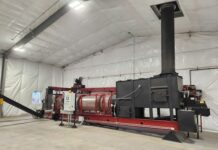
ornamental beds for weed control. White plans to purchase a chip processing
machine to reprocess the wood chips generated by the urban forestry
division’s tree work. White says, “The machine turns out chips
of uniform size and we’d be able to color them as desired. We’d
probably match the pine bark to keep the look consistent with the existing
mulched beds. Our mulch expenditures have been over $20,000 a year, so we
anticipate the machine would pay for itself in four or five years.”
The other major challenge is the weed problem created
by the prodigious seed output of a naturally occurring, hardy plant, the
palmetto (or cabbage palm). Mechanical control is tedious and time
consuming, but the seedlings have thick fronds that are resistant to
absorption, making it difficult to control them by spray applications.
 |
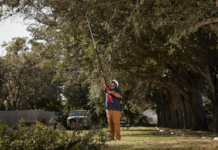
| As director of the Park and Tree Department for the City of Savannah, Ga., David White oversees the preservation and maintenance of the green spaces that are so much a part of the historic charm of the city. |
| |
 |
| Large areas of turf are handled by one-person crews equipped with front-mount or zero-turn mowers. |
|
Working in the spotlight
Savannah embraces special events. Generally, these are
clustered around the weekends, filling two or three weekends of each month.
Some, sponsored by the city, are cultural, such as music in the squares
every Friday at lunchtime. A cooperative Christmas season decorating
program involving the residential areas bordering some of the squares and
chamber of commerce. Outside groups can reserve a site, including the
squares, for a special event. Several spots have become very popular for
weddings and other family gatherings. White says, “There are set
charges for specific sites and deposits are required up front to cover
possible damage to the turf or other parts of the property. Turf surfaces
must be covered with plywood or artificial turf if chairs will be used. The
rules have been in place for many years, covering those types of details,
as well as time limits for setup and teardown that are based on the size of
the event.”
The park services staff understands their role extends
far beyond the maintenance they perform. “Whether it’s a
special event or a typical workday, our crews are constantly aware of the
activity and make sure they don’t do anything that would ruin the
experience for these people. They work the area for a special event early,
so everything is ready for that group’s setup personnel. Their
cleanup is quick and efficient following the group’s teardown. If a
walking tour group approaches, which could be any time, any day,
they’ll shut down equipment so the group can pass through. If people
are sitting on the benches, they’ll work in other areas until that
space is clear. A big part of our program’s success comes from being
courteous to our site users,” White says.
Suz Trusty is a partner in Trusty & Associates, a
communications and market research firm located in Council Bluffs, Iowa.